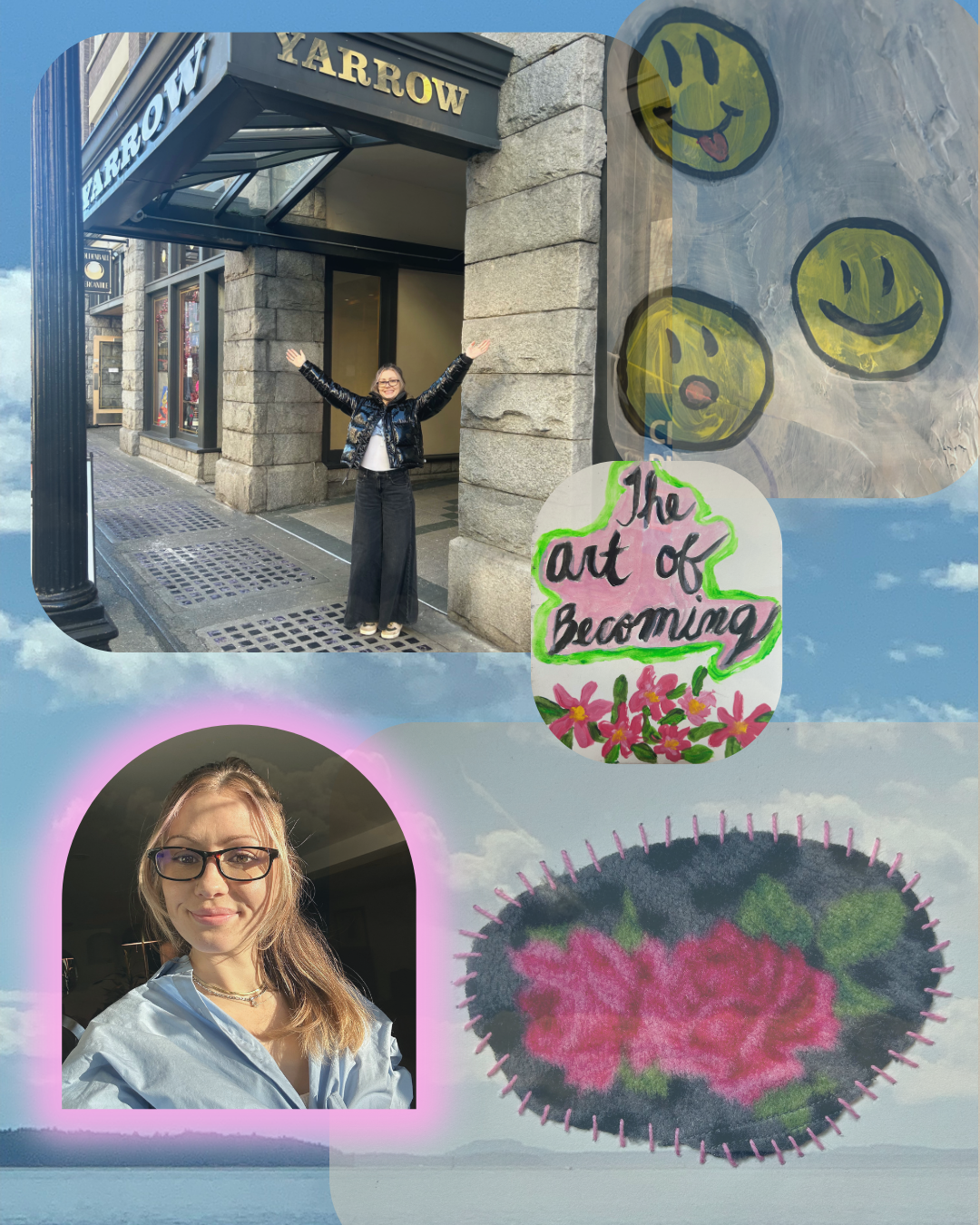
Jenna Tucker (she/her) DKATI, RTC, BFA
My name is Jenna (she/her) and I am a British/Scottish/Irish/Czech professional art therapist practicing on the stolen land of the traditional Lekwungen territory in Victoria BC. I acknowledge the ongoing harmful effects of colonization and strive for a relational, anti-oppressive and decolonial practice. I hold a visual arts diploma from Camosun College, a BFA from Emily Carr University, and I completed my Art Therapy training at the Kutenai Art Therapy Institute. I am a Professional Art Therapist with the Canadian Art Therapy Association (CATA #87043412) who receives regular supervision by a Registered Canadian Art Therapist. I am a Registered Therapeutic Counsellor with the Association of Cooperative Counselling Therapist of Canada (ACCT #4139). Along with my private practice, I facilitate a free, drop-in art therapy group at Our Place Society for people that have been systemically marginalized, struggle with housing security, mental health challenges and substance use.
I identify as queer and have never felt neuro-typical, my brain learns in a particular way- and I recognize everyones does! This neuro-affirming and strengths -based approach nurtures peoples individual gifts and highlights the expansiveness of nature, human experience and the collective.
My roots inform my relational and neuro emergent practice. Let me explain these theories in real words-
Trauma is our body’s natural response to living in environments that are not designed for our wellbeing and it can be passed down generationally. In an oppressive culture, our nervous systems adapt in intelligent and creative ways to help us survive, reduce harm, and stay connected where possible. What may be named as “symptoms” are, in many ways, acts of survival.
this approach invites a shift in how we listen. Instead of asking what is wrong, we ask what has happened—and what has helped. We begin to honour these protective patterns, while gently creating space for new ways of being that are rooted in choice, connection, and care.
Phew! this is a lot of information but an important piece to how I practice is sharing knowledge and not withholding any information from the people I work with!
What does a session look like?
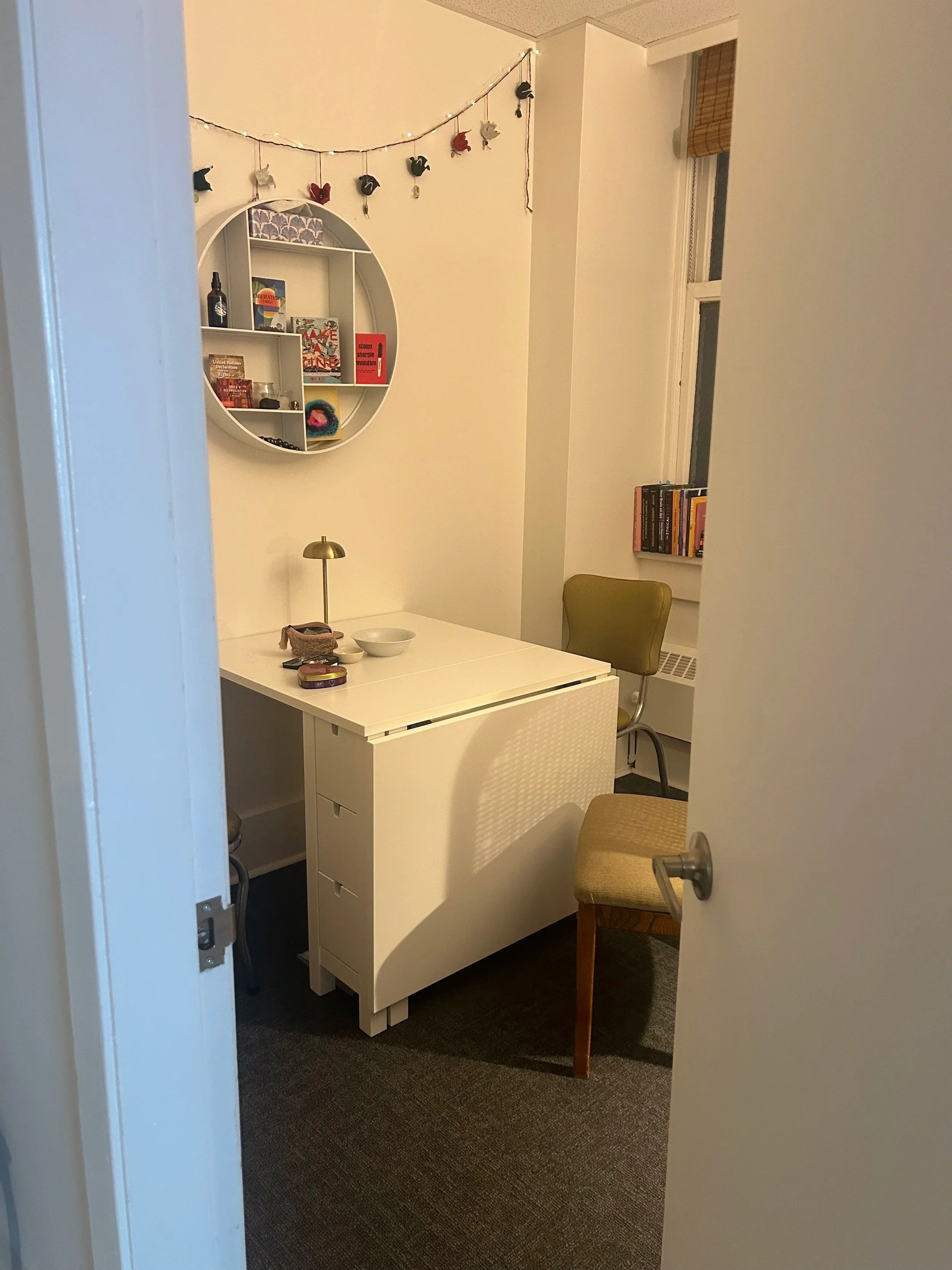
Every session has a beginning, middle and end—> this helps build ritual and ceremony around our sessions. What we do in each session will depend on the person, but first we start with a warm up or art related exercise. It could include somatic or body movement, such as ripping up paper or scribbling, it is a way for us to arrive in our bodies and the space we are in.
you are invited to use whatever materials speak to you- we have an assortment! the level of instruction is up to you! I am prepared to provide specific art projects to assist in self healing and exploration OR there is always room to play with materials and to see where the art takes you- there is therapeutic benefits in both ways of approaching art therapy. I also like art making alongside the people I work with.
the end of the session we might look at what was created, invite curiosity to see what the art has to tell us, or typically there would be some new emotions, ideas, thoughts or revelations that came up during the art making process. You share as much or as little as you want to, I might ask questions about your process or art to help in understanding what happened and how you feel after. The art making process is very emotive and can move a lot of stuck emotions and feelings, I like to find our own ritual around ending the session, and slowly take time to get out of the creative mind set- usually with sensory stimulus such as burning and blowing out of a candle.
NO PRIOR ART EXPERIENCE IS REQUIRED!!!!